BioTrends - Issue #8 Part 5
Birds guiding humans to honey, penguins as champion power nappers, and more...
Welcome back to BioTrends, the weekly newsletter that keeps you updated on the coolest and most important news in life science. Whether you are a teacher, a student, or just a curious reader, you will love what I have in store for you. From genetics and biotechnology to ecology and evolution, I show you how life science is changing the world and your life.
BTW… if you haven’t already, subscribe now and join the BioKnowledge circle!
Welcome to the first week of my newsletter in FIVE PARTS!
In case you haven’t read Sunday’s newsletter (Part 1) this will be my approach going forward, as an experiment.
Our themes this week are as follows.
(Note that this can change week to week, based on the stories compiled. Keep you on your toes!)
SUNDAY: Caribbean & Global South, Bio-Tech Innovations
MONDAY: Health & Disease Breakthroughs & Discoveries
TUESDAY: Biological Research Discoveries
WEDNESDAY: Health of the Planet, Fighting Climate Change
THURSDAY: The Quirky and Interesting!
So on this LAST DAY I’ll be covering the quirky and interesting!
Interestingly, examples of other species helping humans seemed to be the theme, with Dune sandworms and electric eels bringing up the rear.
So as we say in my country, ‘no stickin’. Let’s do this.
BIG NEWS!
Honeyguide Bird Hunts for and Shares Honey with Humans
Cooperative relationships exist between different species throughout the living world. These are symbiotic relationships known as mutualism or commensalism.
A University of California – Los Angeles (UCLA) study sheds light on a rare kind of cooperative relationship between humans and wild animals. It has even become an instance of cultural co-evolution.
This relationship exists between peoples of several African cultures and the Greater Honeyguide bird (Indicator indicator). One of those cultures is the Hadza people of Tanzania. The bird helps the people find bee nests, and the honey inside.
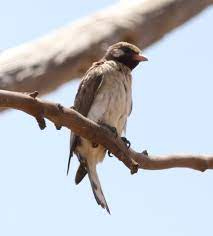
"Honeyguides seem to know the landscape intimately, gathering knowledge about the location of bee nests, which they then share with people.” Claire Spottiswoode1, co-author of the study (University of California - Los Angeles, 2023).
So how does this relationship work?
The honey-hunters announces their interest in partnering with the bird, using a whistling sound, unique to their community. The bird responds once it recognizes the call. Interestingly, if the call is made by someone outside of the community, the bird is far less likely to respond. These calls are passed down from generation to generation.
"Our study demonstrates the bird's ability to learn distinct vocal signals that are traditionally used by different honey-hunting communities, expanding possibilities for mutually beneficial cooperation with people," Brian Wood2, co-author of the study (University of California – Los Angeles, 2023).
Once the honey-hunters and the honeyguide partner up, the bird leads them to the best bees’ nests in the area. In return, the bird gets to feast on the beeswax and larvae, once the hunter breaks the nests open.
This relationship has been very fruitful.
“Honeyguides increased Hadza hunter-gatherers' rate of finding bee nests by 560% and led them to significantly higher-yielding nests than those found without honeyguides.”
(University of California – Los Angeles, 2023)
Other Stories
Chinstrap penguins of Antarctica are the champions of taking power naps.
They take seconds-long micro-naps over 10,000 times a day. And those naps add up! They can get over 11 hours of sleep during the day, while staying on alert for predators. Maybe we should start calling cat naps, penguin naps!
Living organisms protect the Great Wall of China from erosion.
The Great Wall of China is very old.

Construction began in 221 B.C. Yet after several thousands of years, it remains standing. And in a recent study, scientists have discovered that living material, integrated into the walls, plays a significant role in keeping it together.
The walls are not made of stone, but of soil and gravel pressed together. This material became the perfect substrate for living organisms – called biocrusts. This in turn helped protect the structures against rain and wind erosion, over thousands of years.
“This living stucco is made up of cyanobacteria (microorganisms that are capable of photosynthesis), mosses and lichens that help reinforce the construction, especially in arid and semi-arid parts of the country…They found that the “biocrust” samples were sometimes three times stronger than the plain rammed earth samples.” (Nalewicki, 2023)
A Sand-dwelling fungus has been named after Dune’s Sandworms.
It is a “stalked puffball” fungi recently discovered in Hungary. It looks like the iconic Dune sandworm erupting out of the ground. The resemblance is uncanny!
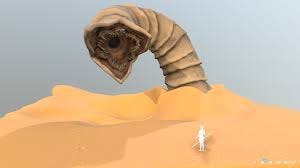
Electric eels may be doing genetic modification using electricity
Researchers have found that when an electric eel emits an electric shock, the genes of nearby fish larvae are changed. It may be an example of electroporation in nature, where an electric field triggers the formation of pores in cell membranes. DNA, protein and other similar molecules would then be able to get into the cell.

So that is it for today and this week! Look out for more stories from Sunday, as we do this all over again next week!
Get all issues delivered to by inbox by subscribing.
JOURNAL ARTICLES OF RESEARCH MENTIONED
Claire N. Spottiswoode, Brian M. Wood. Culturally determined interspecies communication between humans and honeyguides. Science, 2023; 382 (6675): 1155 DOI: 10.1126/science.adh4129
P.-A. Libourel et al., Nesting chinstrap penguins accrue large quantities of sleep through seconds-long microsleeps. Science 382,1026-1031(2023). DOI:10.1126/science.adh0771
Shintaro Sakaki, Reo Ito, Hideki Abe, Masato Kinoshita, Eiichi Hondo, Atsuo Iida. Electric organ discharge from electric eel facilitates DNA transformation into teleost larvae in laboratory conditions. PeerJ, 2023; 11: e16596 DOI: 10.7717/peerj.16596
Yousong Cao et al., Biocrusts protect the Great Wall of China from erosion. Sci. Adv. 9, eadk5892 (2023). DOI:10.1126/sciadv.adk5892
SOURCES
Buehler, Jake. (2023, November 30). These nesting penguins nod off 10,000 times a day, for seconds at a time. ScienceNews. Retrieved December 4, 2023 from https://www.sciencenews.org/article/chinstrap-penguins-sleep-seconds-micronaps
Buehler, Jake. (2023, December 7). Sand-dwelling fungi discovered and named after Dune’s giant sandworms. NewScientist. Retrieved December 10, 2023 from Sand-dwelling fungi discovered and named after Dune's giant sandworms
Nagoya University. (2023, December 5). 'Shocking' discovery: Electricity from electric eels may transfer genetic material to nearby animals. ScienceDaily. Retrieved December 10, 2023 from www.sciencedaily.com/releases/2023/12/231205114816.htm
Nalewicki, Jennifer (2023, December 8). The Great Wall of China is being held together by “biocrusts.” LiveScience. Retrieved December 10, 2023 from https://www.livescience.com/archaeology/the-great-wall-of-china-is-being-held-together-by-biocrusts
University of California - Los Angeles. (2023, December 7). Wild birds lead people to honey -- and learn from them. ScienceDaily. Retrieved December 10, 2023 from www.sciencedaily.com/releases/2023/12/231207160410.htm
Join our BioKnowledge Circle! Don’t miss out on the latest insights and captivating content. This weekly series will always be free.
Subscribe now to receive my newsletter directly to your inbox (or the Substack app) every week!
See you next week!
University of Cape Town ornithologist
UCLA anthropologist